Santa Maria di
Porto Salvo Audio guide

Tap the arrow below to start your journey through the Church of Santa Maria di Portosalvo.

Welcome

Introduction

Welcome to the Church of Santa Maria di Portosalvo.A special place, where the sea meets faith, and history blends with the daily life of sailors.It is the year 1554. We are outside the city walls of Naples, in the Mandracchio area. Here, feluccas arriving from Massa Lubrense docked, loaded with wine, fruit, dairy products, and the renowned calves, ready to supply the city markets. Imagine the shouts of the merchants, the scent of the sea, the endless movement of boats and men.It was in this setting that the church was born. A fisherman, Bernardino Belladonna, survived a shipwreck and made a vow to the Virgin to build a sacred place.Santa Maria di Portosalvo thus became a beacon of hope, a refuge for sailors, a safe harbor.Visible from the sea, it marked the return home.Prepare yourself for a journey through time, among art, faith, and memory.

The Origins

Stop 1

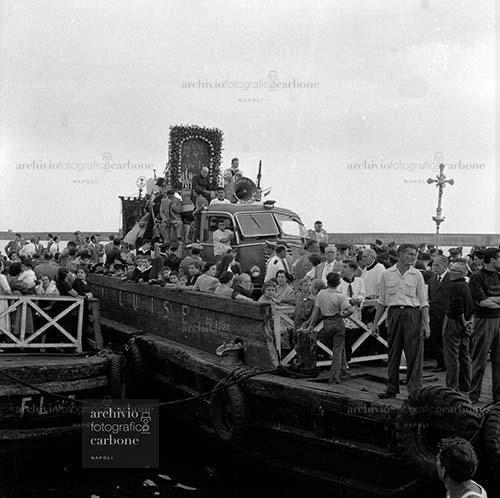
The origins of this church are tied to a miracle at sea. According to legend, Bernardino Belladonna, a sailor traveling to Constantinople, faced a terrible storm. His boat was lost, but he survived, along with an icon of the Virgin of Constantinople that he carried with him.In that moment of fear and gratitude, he promised the Virgin to build a place of worship. And he kept his promise.He joined other fishermen, shipowners, and sailors. Tough men of the sea, used to hardship and the risks of the waves. Together they founded a lay confraternity, a supportive community bound by faith and mutual aid.They chose the Mandracchio, the small harbor outside Porta di Massa, as the site for their chapel. A place suspended between city and sea, surrounded by water on three sides.The church we visit today was born this way: from the vow of one man, from the strength of a community, and from a faith that turned fear into hope.

Exterior

Stop 2

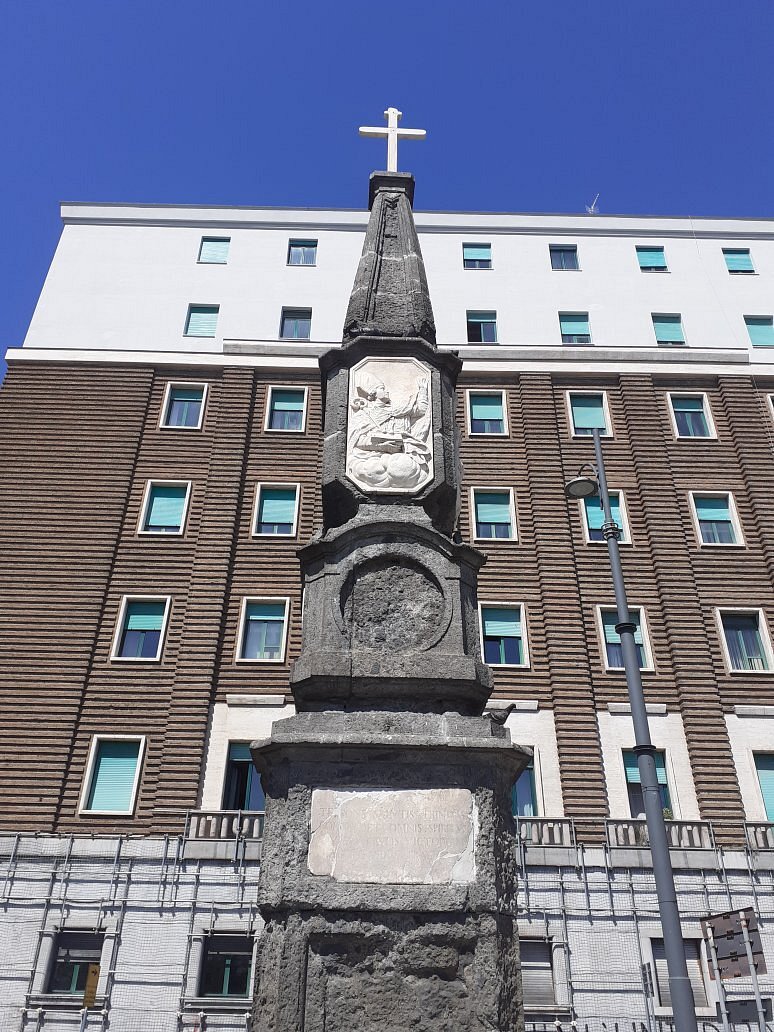
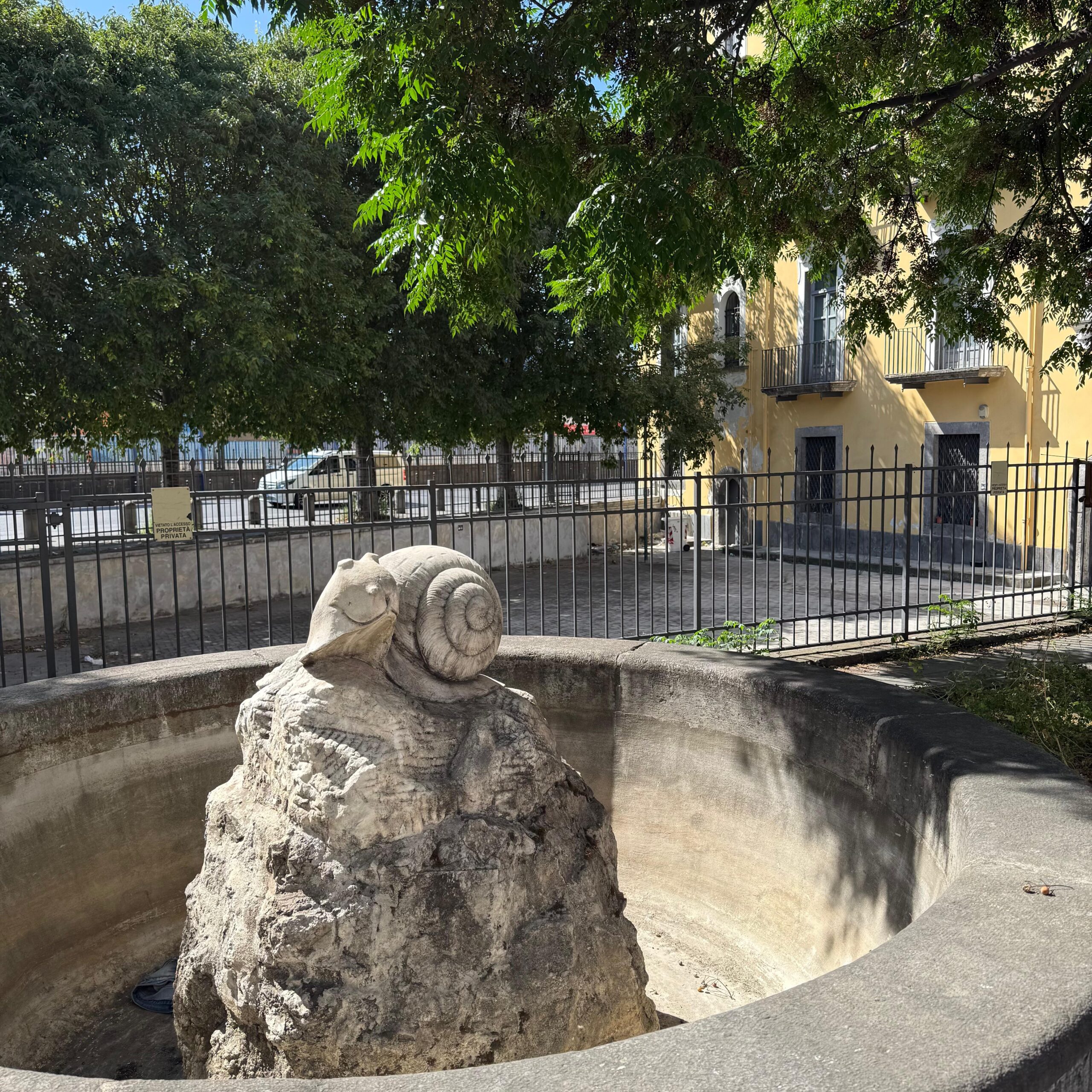
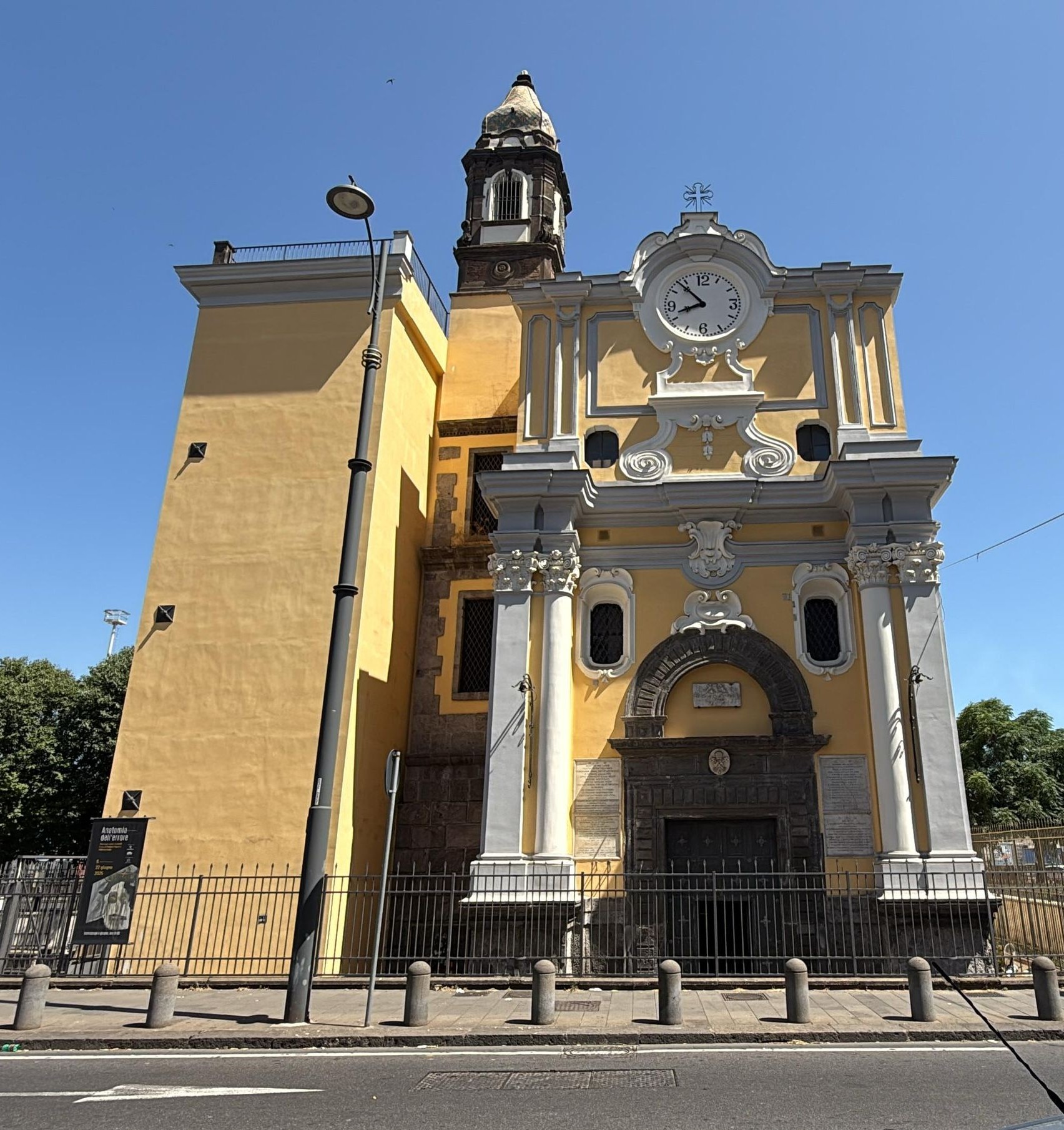
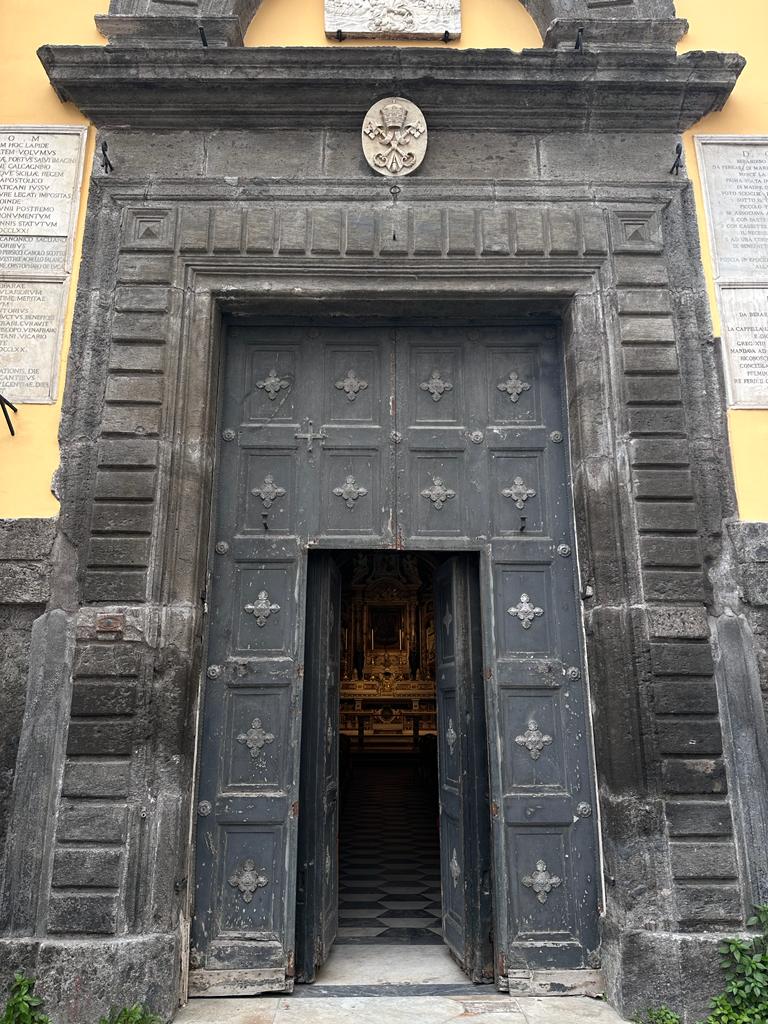
Before entering, look at the church façade.Today it stands lower than street level. The piperno stone portal, sober yet elegant, is a mark of Neapolitan Renaissance style. Above it, a lunette frames the entrance; on either side, two polygonal windows with stucco decorations break the severity of the stone.To the right, some plaques tell of the confraternity’s strength. One in particular recalls that King Ferdinand II granted sailors the right to manage their own assets and even to impose excommunication on their opponents — a rare and powerful privilege.Next to it rises the Collegio dei Marinaretti, founded in the 18th century to welcome and educate the orphaned children of fishermen.In the garden, two symbols still speak to us. The 16th-century Fountain of the Maruzza, with its large snail that once poured fresh water. And the Portosalvo Obelisk, erected in 1799 to celebrate the fall of the Neapolitan Republic, topped by the Virgin holding a globe — a sign of universal protection.

Nave and Ceiling

Stop 3

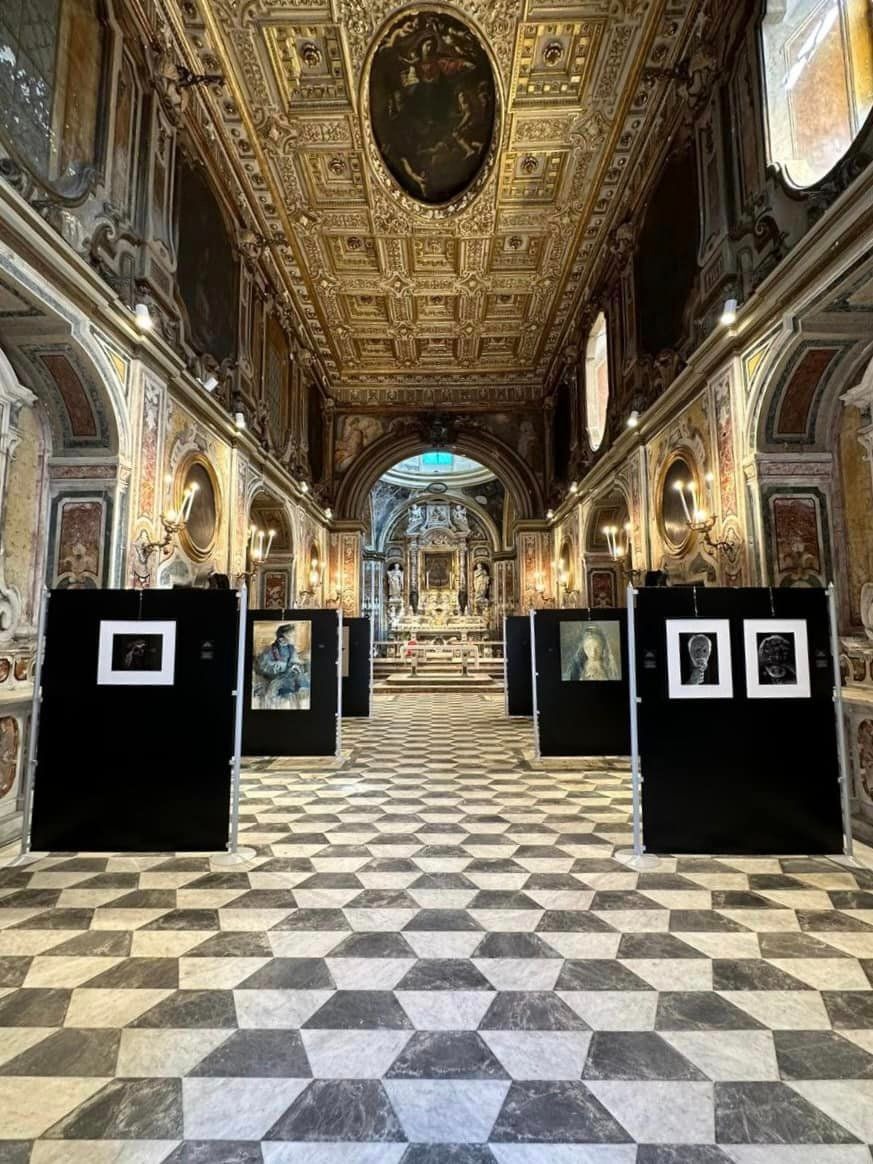
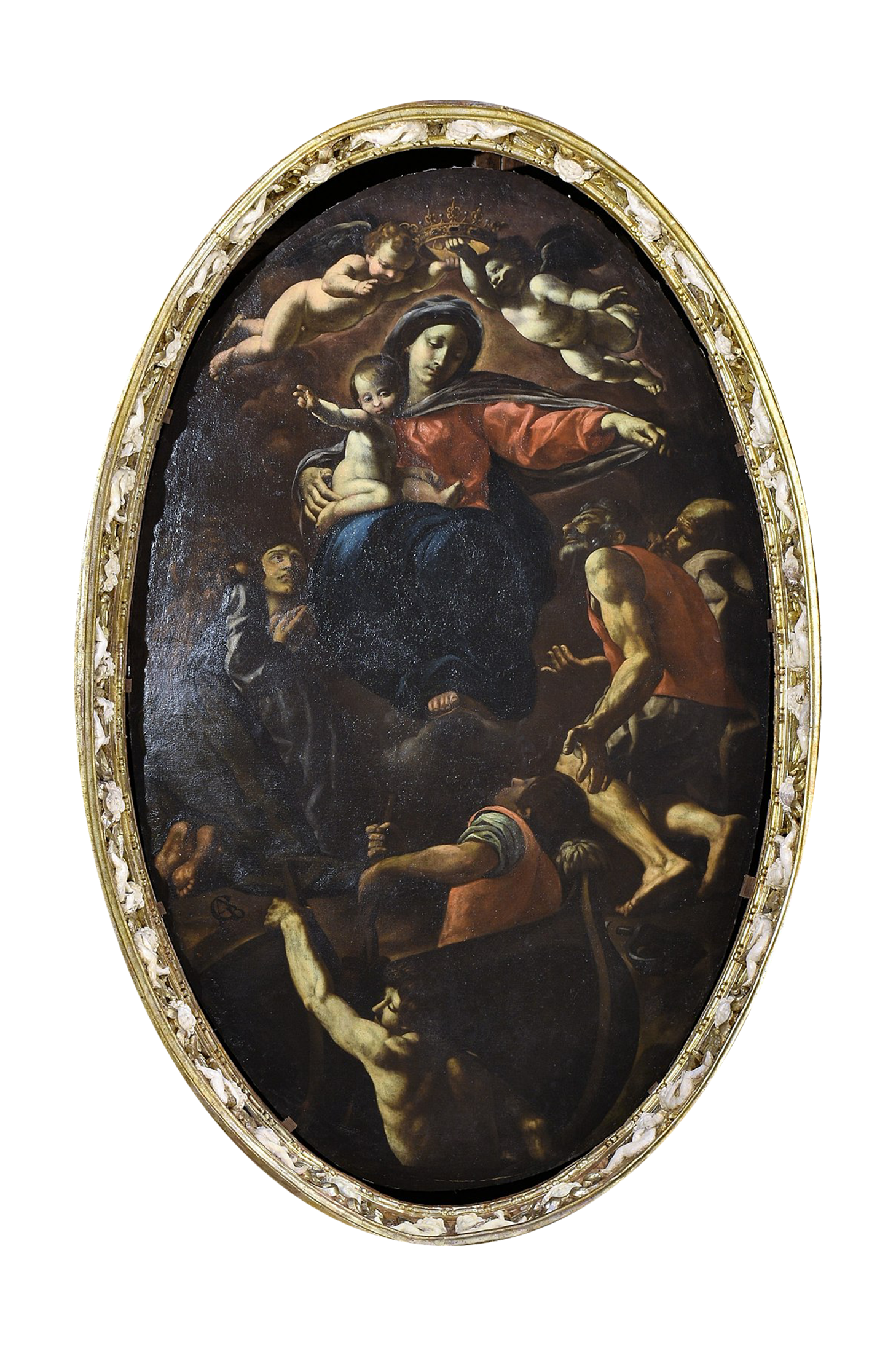
Upon entering, your gaze is drawn upward.The church unfolds in a single nave, enriched with polychrome marble and a gilded coffered wooden ceiling. Here shines its most precious treasure: The Glory of the Virgin, a masterpiece by Battistello Caracciolo, dated 1634.At the center, the Madonna opens her mantle to protect sailors at the mercy of the sea. The figures, with their intense faces and bronze-like skin, speak of fear and hope. Light, sharp and cutting, emerges from darkness — the legacy of Caravaggio, brought to Naples with unique power by Caracciolo.Look closely: beside a ship’s mast you can read the monogram “CAV.” It is the artist’s signature, a discreet and ancient mark.The ceiling that frames this treasure was built by Nicola Antonio Conte and Master Michelangelo in 1634. Wooden carvings, gilding, and harmonious geometries enclose the painting.Everything here speaks of protection. Of a sky watching over sailors.

Side Altars

Stop 4

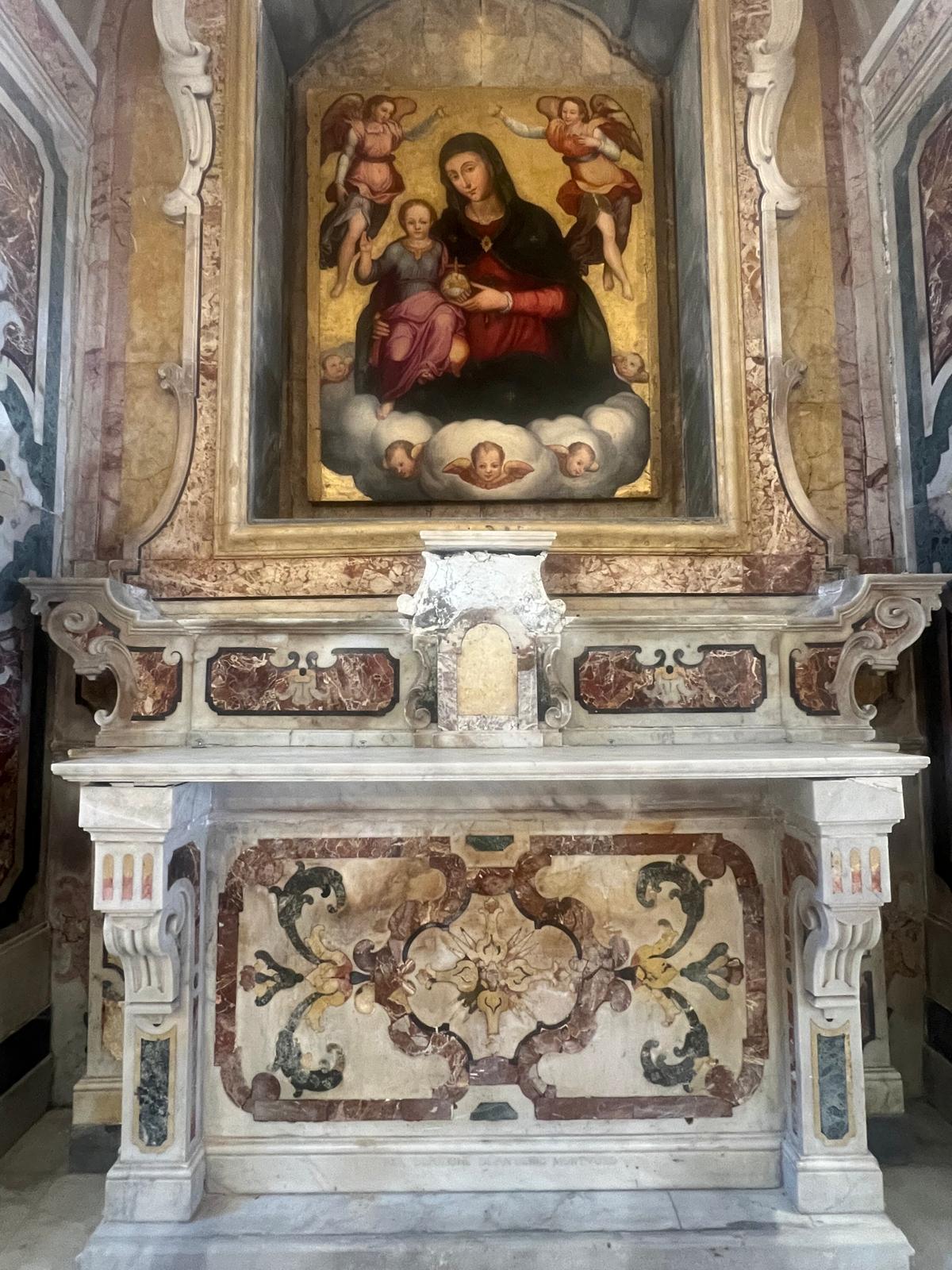
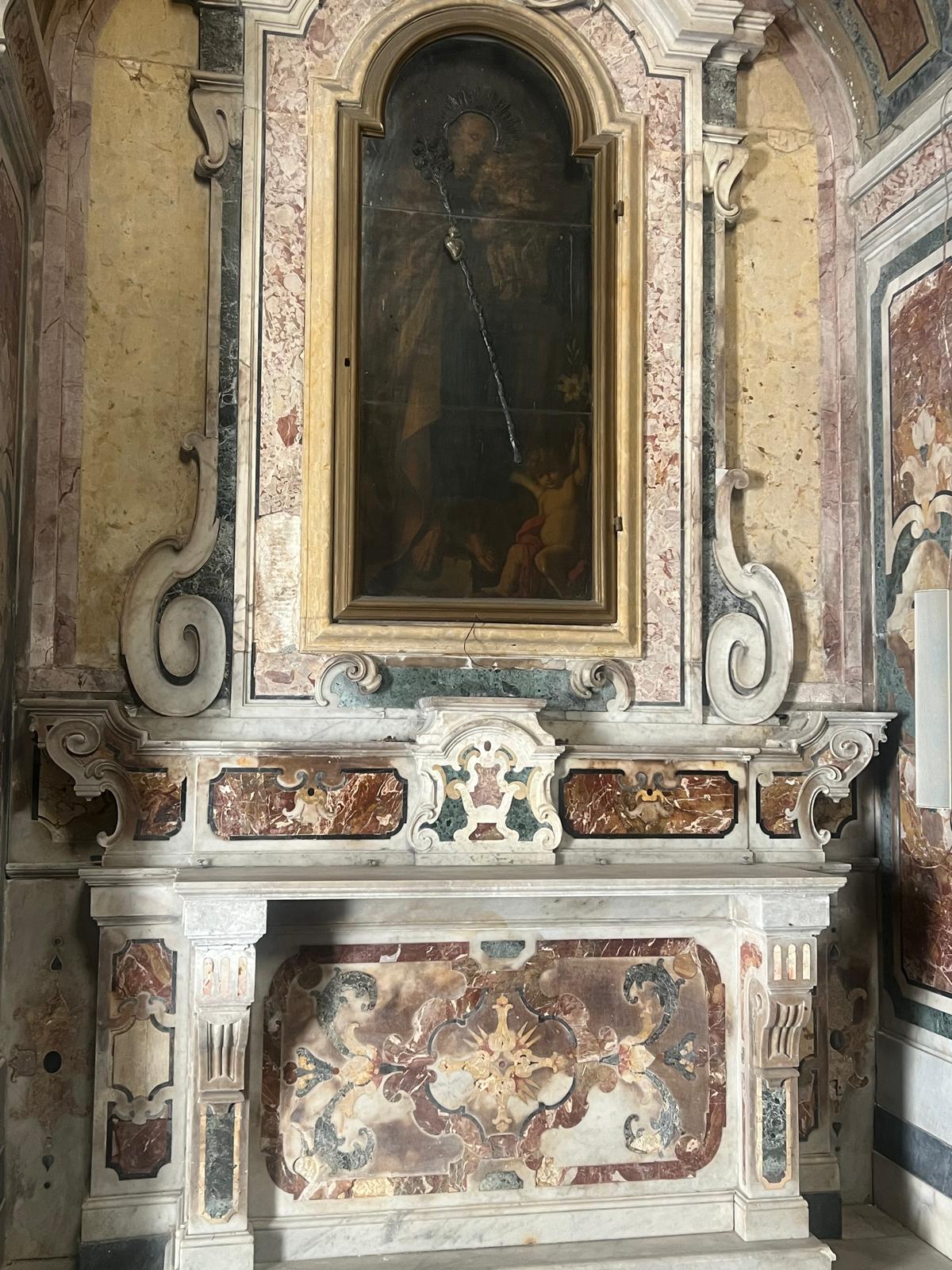
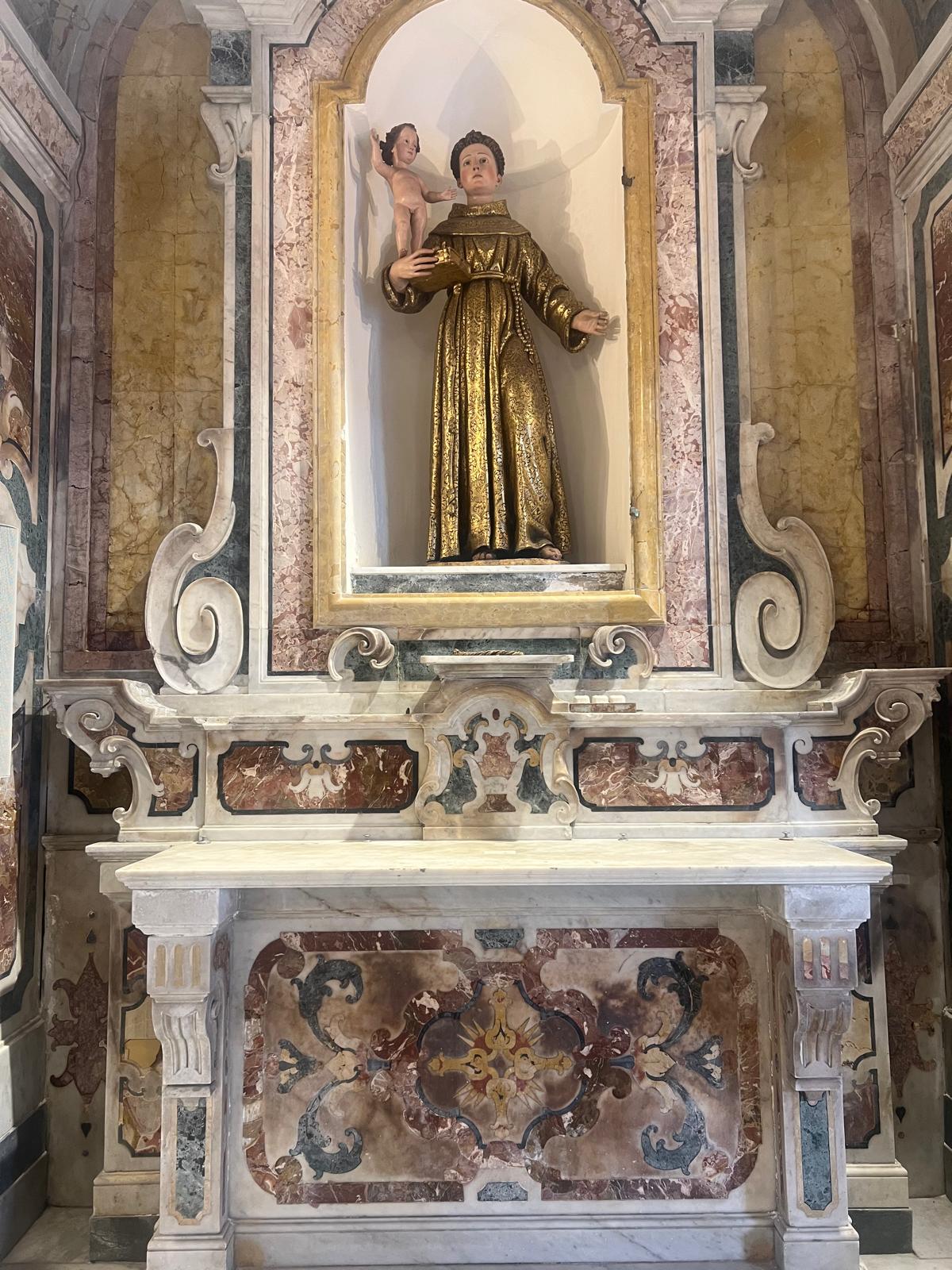
On either side of the nave stand four minor altars, dated 1744. Each one holds a work of faith, devotion, and art.Entering the church, the first altar on the right houses the wooden statue of Saint Anthony of Padua, dated 1600. His gilded robe reveals the precious Spanish technique of estofado, which lets the gold shine through the paint.The second altar on the right preserves a wooden panel with a pure gold background. It depicts the Madonna of Portosalvo, the same image that until the 1960s was carried in procession by land and sea on June 30. It is attributed to the school of Giovanni Antonio Criscuolo, a refined 16th-century painter.The first altar on the left displays a painting of Saint Joseph, with a silver ex-voto: the flowering staff, the headpiece, the Sacred Heart of Mary. It is attributed to Domenico Littiero, an artist of the early 18th century.The second altar on the left contains a late 17th-century Crucifix.

Oval Paintings

Stop 5

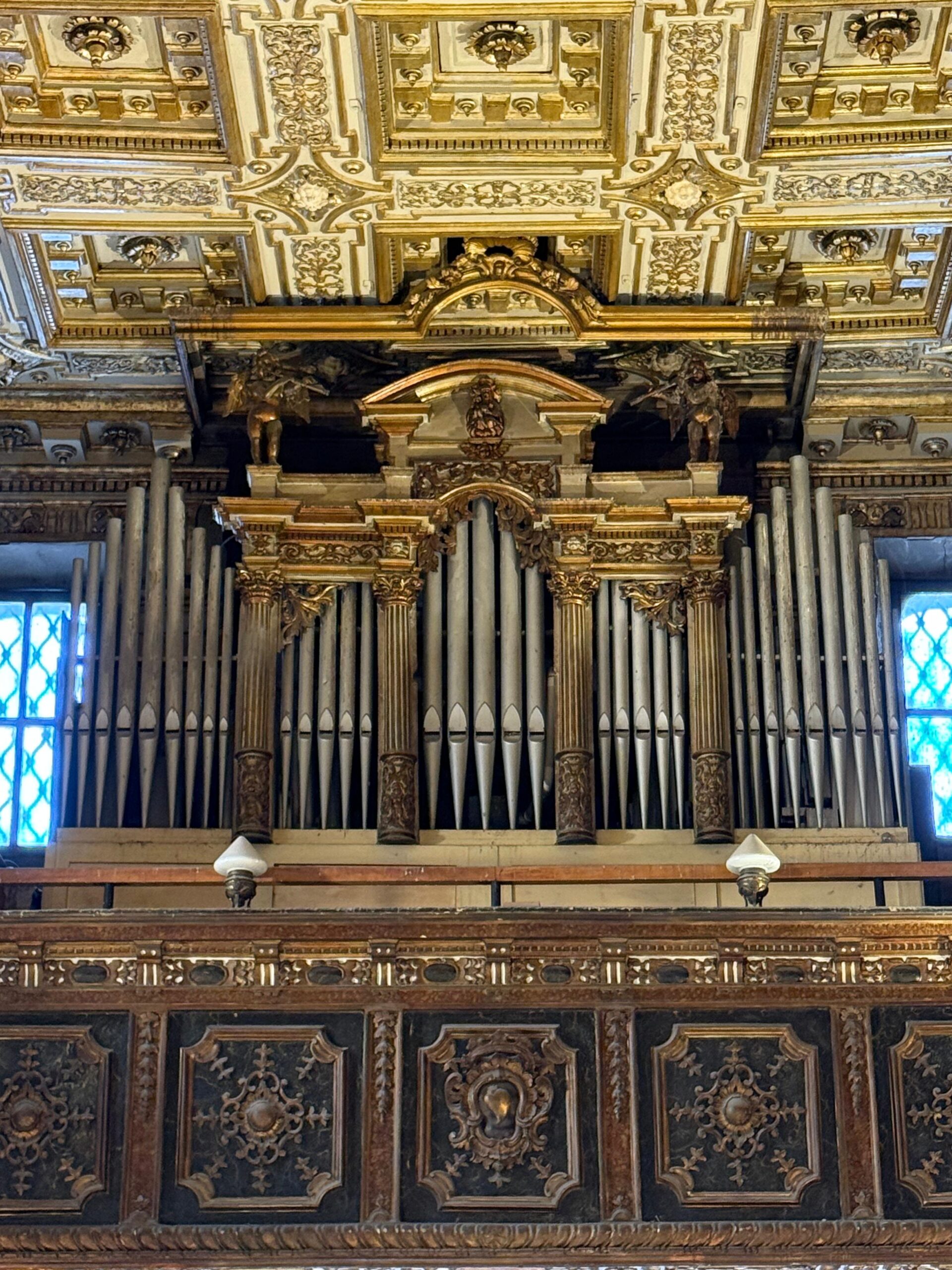
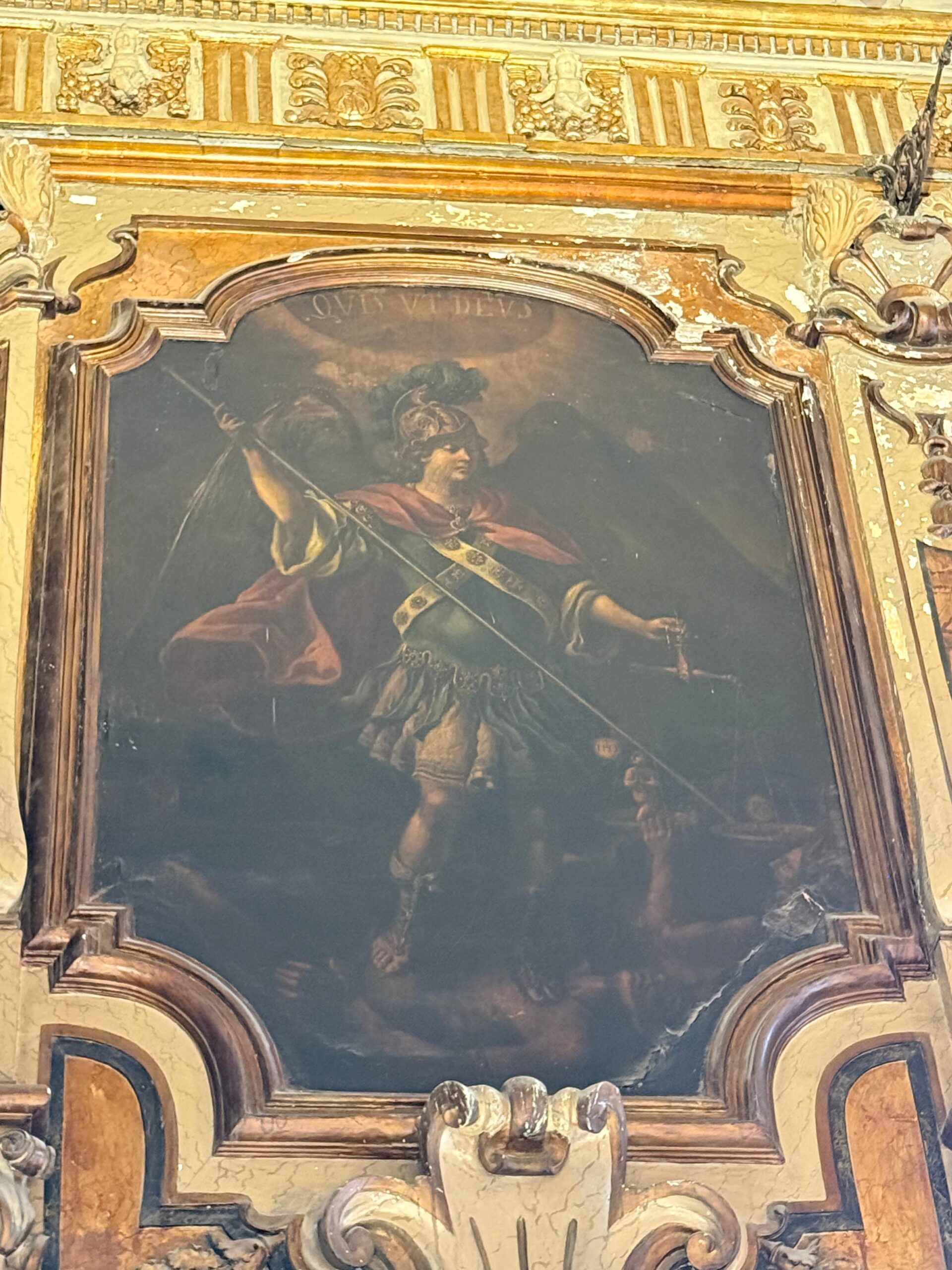
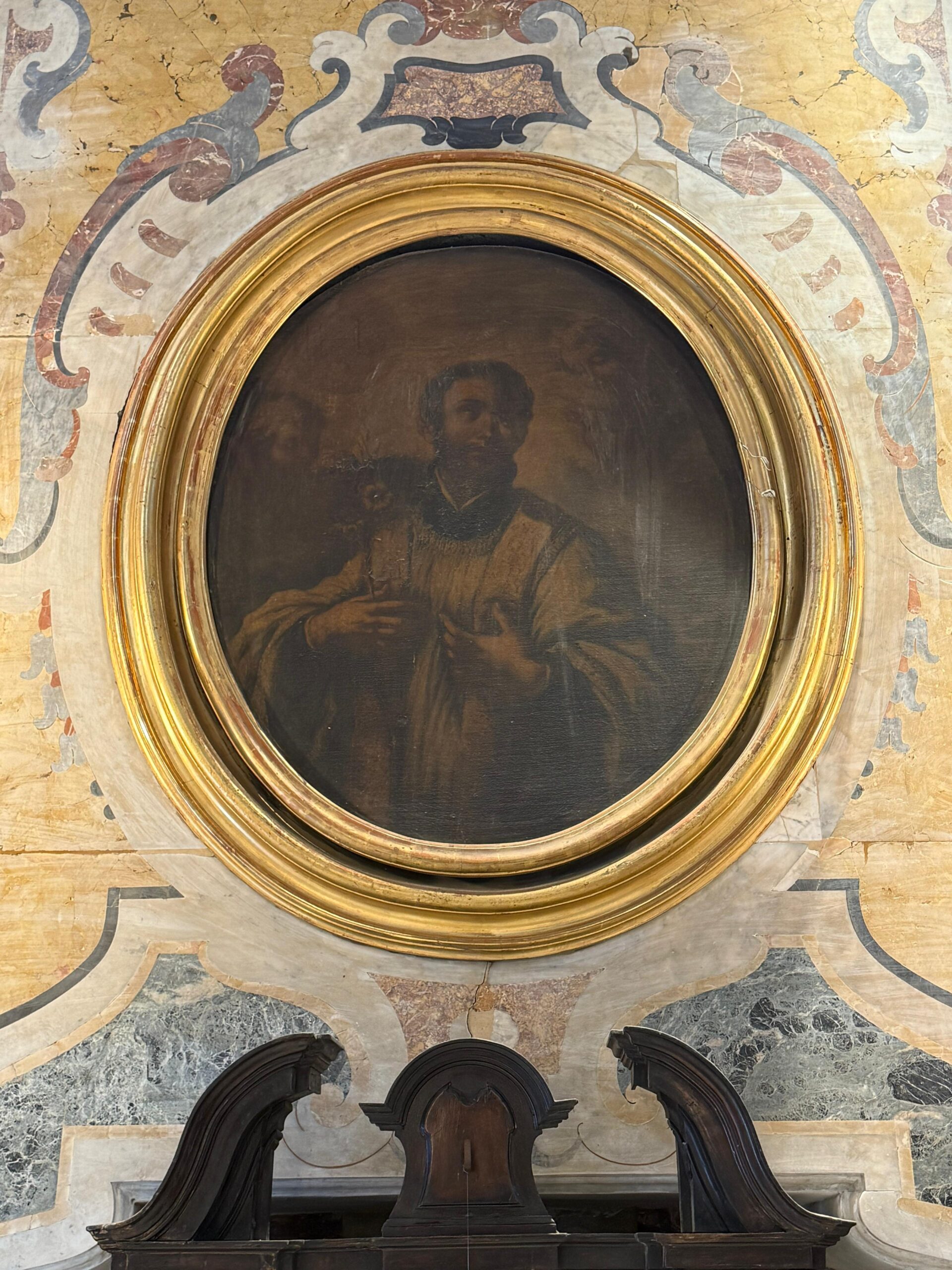
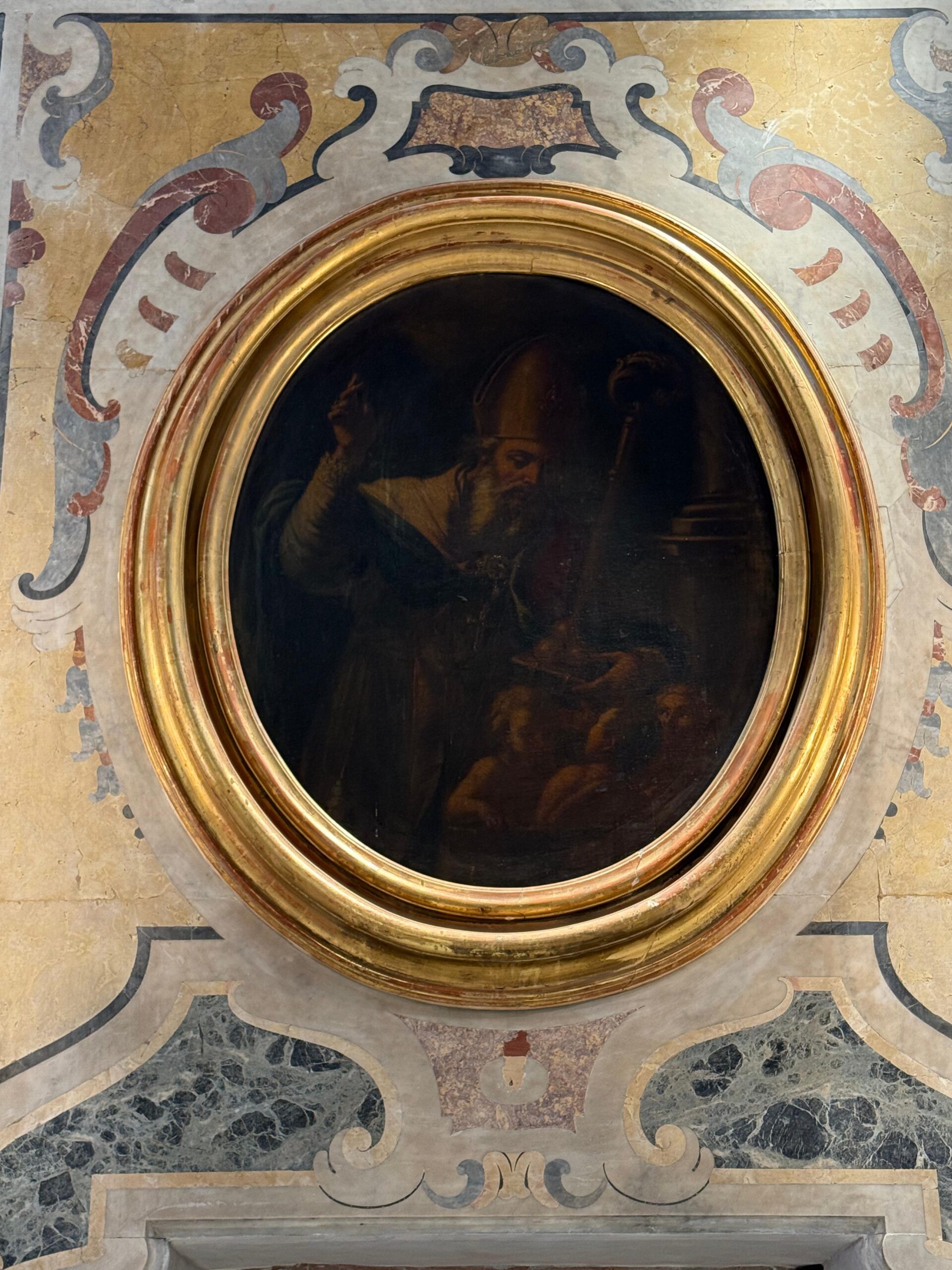
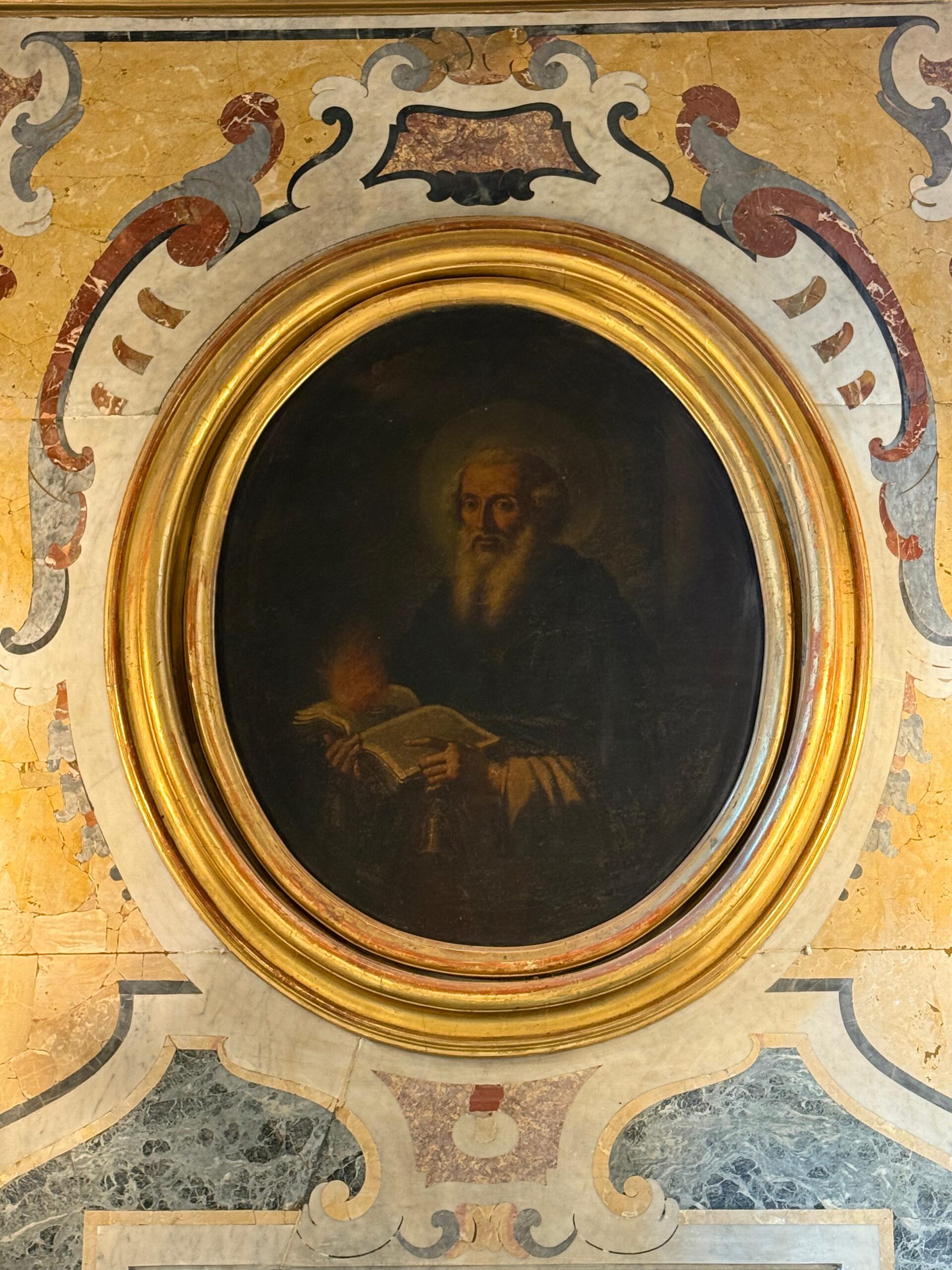
Beside the altars you will find six splendid oval paintings, guardians of faith and history.The first four depict great saints: Saint Anthony Abbot, with his symbols of healing and preaching; Saint Nicholas of Bari, protector of the poor and inspiration for the figure of Santa Claus; Saint Francis Xavier, a Jesuit inflamed with missionary zeal; and Saint John Nepomucene, martyr of confession and protector of bridges, highly venerated during the Bourbon era.The last two paintings depict moments of profound spirituality: Christ and the Samaritan Woman and The Baptism of Christ, works by Evangelista Schiano.Looking above the entrance, you can admire the 18th-century organ with its 17th-century choir loft. On either side, two other paintings: Saint Cecilia, unfortunately cut to make room for the organ, and a mysterious female saint, perhaps Saint Patricia.This path invites visitors to be enveloped by beauty and by the sacred story preserved in every detail.Now, move towards the altar.

Presbytery Area

Stop 6

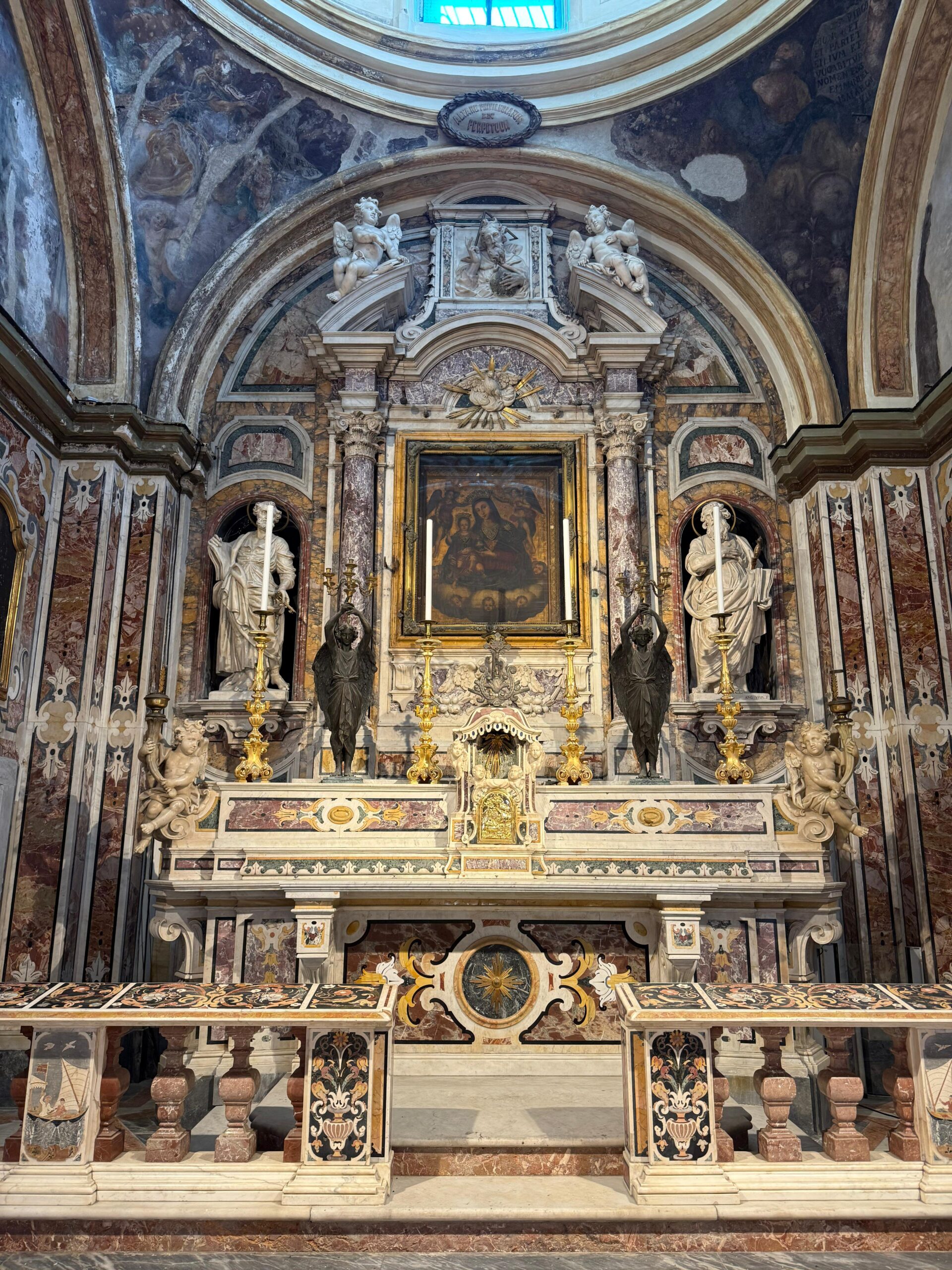
Here we are in the presbytery, the spiritual and artistic heart of the church. Every element here tells of faith, art, and devotion. From the balustrade that welcomes the faithful to the dome that once rose painted with frescoes, everything was designed to lift both eyes and heart towards the divine.Let us proceed together, step by step, to discover each detail.

Main Altar

Tappa 6.1

Carved between 1769 and 1772 by Antonio di Lucca, it replaced the earlier 16th-century altar. It holds the 18th-century panel of the Virgin of Portosalvo, venerated by sailors.On either side, two angels solemnly bear candlesticks. In front, the modern altar table, introduced after the Second Vatican Council, allows Mass to be celebrated facing the congregation, as a sign of greater community participation.

Tabernacle

Stop 6.2

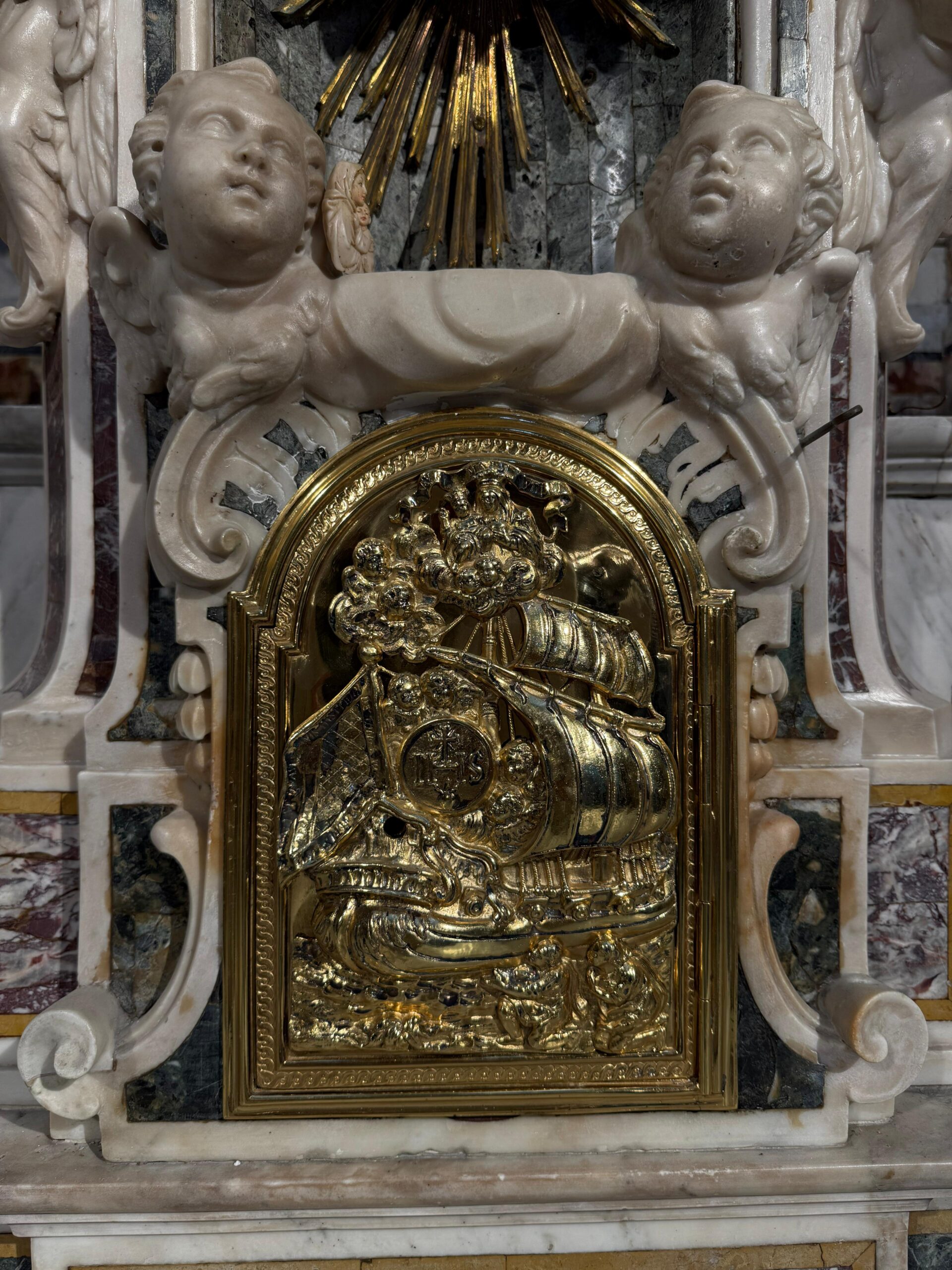
The tabernacle preserves a precious inscription: Ave Maris Stella — “Hail, Star of the Sea.” This ancient Marian title recalls the Virgin’s protection over those who face the waves of the sea and of life, a symbol deeply tied to the maritime identity of the church.

Altarpiece and Tribune

Stop 6.3

The altarpiece and the tribune hold the statues of Saints Peter and Paul, sculpted in 1806 by Angelo and Giacomo Viva. The same artists also created the angels and the Eternal Father above.After the 1980 earthquake, the lateral columns were replaced. The painting of the Virgin shows elements linked to both the Virgin of Mount Carmel and the Virgin of Constantinople, such as the clouds at her feet. She does not hold a light in her hand, but a globe — a symbol of dominion and protection.

Lunettes and Lower Works

Stop 6.4

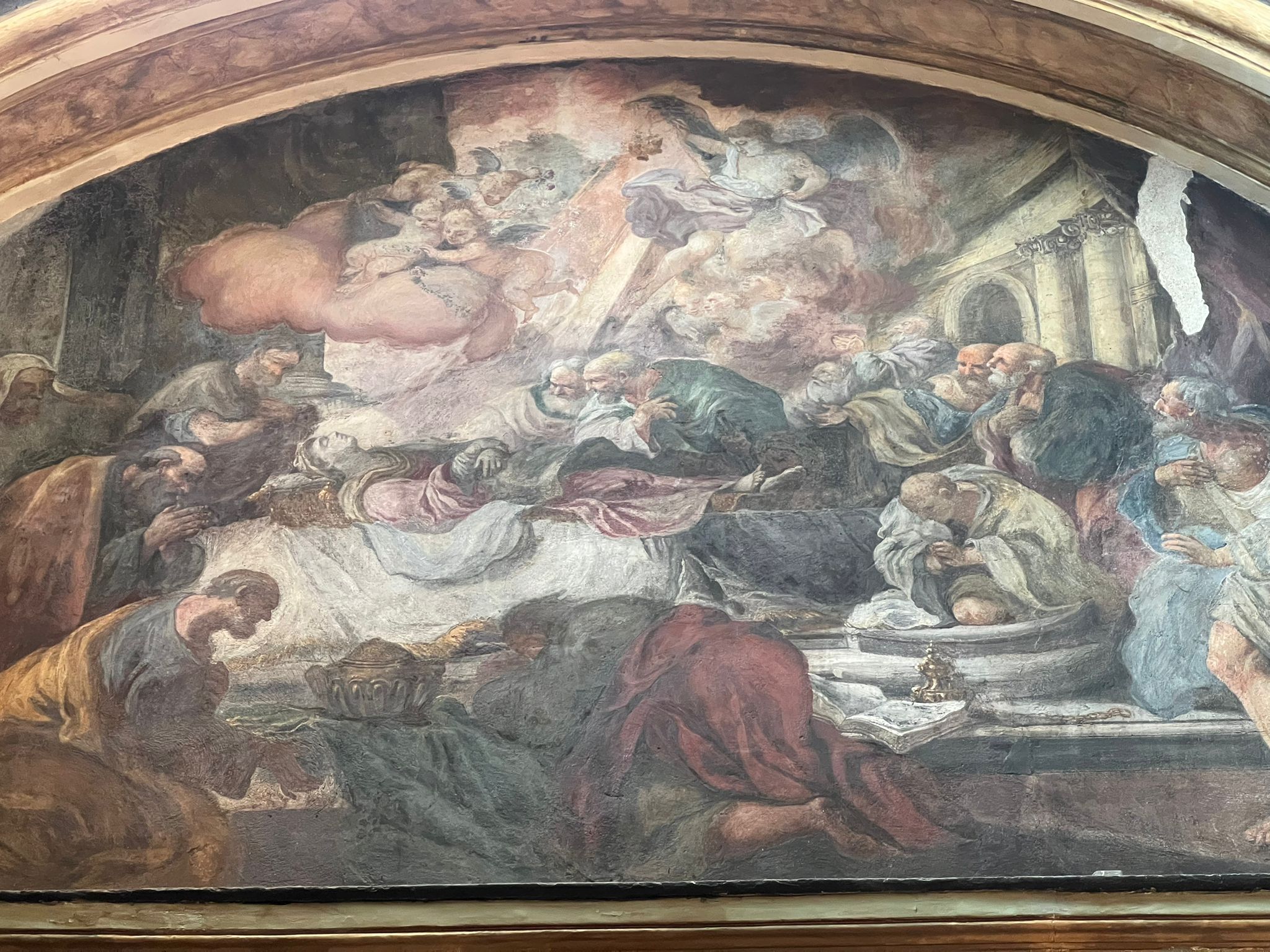
Two side lunettes depict the Birth and the Dormition of the Virgin, in Byzantine tradition, attributed to Francesco Palumbo and Nicola Russo.Below, on the left, is a copy of The Resurrection of Christ by Marco Pino of Siena. On the right, Our Lady of the Rosary with the Souls in Purgatory, a work by Antonio De Bellis, who portrayed himself at the bottom. The coral rosary recalls the deep connection with the sea and with sailors.

Saints, Spandrels and Dome

Stop 6.5

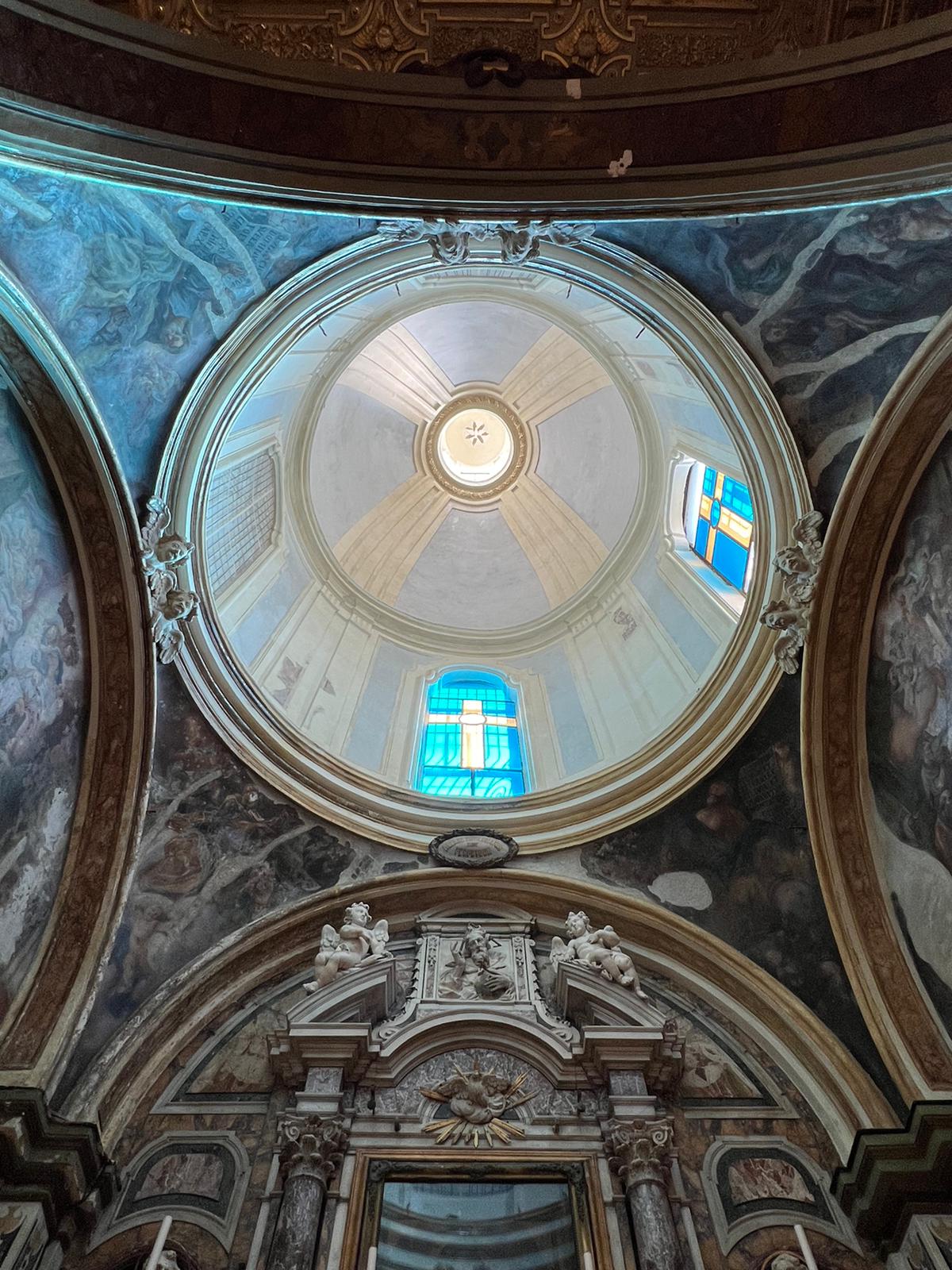
Below the lunettes appear Saints Philip Neri, Leonard, Erasmus, and Francis de Sales, founders of religious congregations.In the spandrels of the dome, four prophets uphold the vault. The dome itself, once frescoed, probably by Nicola Russo, unfortunately lost its paintings due to humidity. Finally, the arch before the drum shows intertwined lilies forming the letters A V M: Ave Virgin Mary.

The Confraternity

Stop 7

In 1580, the fishermen of Portosalvo founded a lay confraternity, a sign of shared faith and concrete solidarity.Each year, on June 30, after the procession with the image of the Madonna, the governors were elected: six men chosen for their virtue, but only four would receive the role, drawn by the innocent hand of a child under the altar. Three received the keys, while the fourth received the alms chest, placed at the feet of the Virgin.That chest was the heart of the community: it supported sick confraternity members, provided dowries for daughters without marriage prospects, and preserved hope. During funerals, twenty torches accompanied deceased fishermen to the cemetery, strengthening the bond between the living and the dead.This tradition remained alive until the 1960s. Under the altar and along the nave, five trapdoors hold the confraternity members buried in the Holy Land, still bathed by sea water: a silent dwelling of memory and devotion.

Restoration and Lost Works

Stop 8

Since 2022, the Church of Santa Maria di Portosalvo has found its voice and community again thanks to the social cooperative Culturadice, founded by young people passionate about cultural heritage and social innovation.Today, the cooperative not only promotes events, but also takes daily care of the place, ensuring cleanliness and hospitality, so that it always remains alive and open.The church has thus become a space open to everyone: in addition to art exhibitions, literary festivals, small concerts, theatrical plays, and musical performances, it also hosts workshops for children, youth, and adults, designed to bring the place back to life and strengthen its bond with the community.Among the artists who have animated its nave are Michelangelo Della Morte, Fabio Abbreccia, Lo Chan Peng, and actors such as Sebastiano Somma.Thus, a building that had remained closed and silent for decades has returned to being the beating heart of the neighborhood, capable of uniting faith and beauty, memory and future, tradition and social innovation.
La nuova vita con culturadice

Tappa finale

Dal 2022 la Chiesa di Santa Maria di Portosalvo ha ritrovato voce e comunità grazie alla cooperativa sociale Culturadice, fondata da giovani appassionati di patrimonio culturale e innovazione sociale. Oggi la cooperativa non solo promuove eventi, ma si prende cura quotidianamente del luogo, garantendo pulizia e accoglienza, perché resti sempre vivo e fruibile.
La chiesa si è così trasformata in uno spazio aperto a tutti: oltre a mostre d’arte, rassegne letterarie, piccoli concerti, spettacoli teatrali e performance musicali, qui si svolgono anche attività laboratoriali per bambini, giovani e adulti, pensate per far rivivere questo luogo e rinsaldare il legame con la comunità.
Tra gli artisti che hanno animato le navate ricordiamo Michelangelo Della Morte, Fabio Abbreccia, Lo Chan Peng, e attori come Sebastiano Somma. Così, un edificio rimasto per decenni chiuso e silenzioso è tornato a essere cuore pulsante del quartiere, capace di unire fede e bellezza, memoria e futuro, tradizione e innovazione sociale.

Credits

A project curated by

Coop. Sociale Città di Leonia

Project manager

Fabio De Bernardo

Content research and editorial coordination

Coop. Sociale Seme di Pace

Coordination of museum copywriters
and authors

Alessia Maccaroni

Curated translations and native-language
revisions by

Consorzio Co.Re

Audio editing and production

La Musica Ribelle

Digital platform development

Coop. Sociale Città di Leonia

User Experience and User Interface by

Coop. Sociale Seme di Pace